
Why ERAS?
Patient-Centered, Evidence-Based Perioperative Care
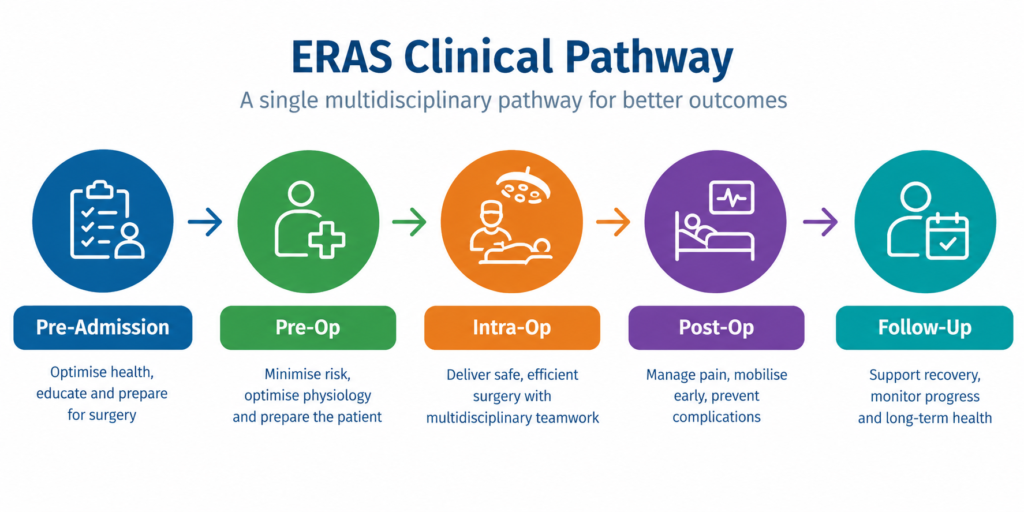
Enhanced Recovery After Surgery (ERAS) is a multimodal perioperative care pathway designed to achieve early recovery and reduce hospital stay for patients undergoing major surgery. Developed by the ERAS Society—an international non-profit medical organization founded in 2010—ERAS replaces traditional perioperative routines with evidence-based best practices across the entire patient journey. By systematically addressing key surgical stress factors, ERAS programs shorten hospital length of stay by 30% or more, decrease postoperative complication rates by at least as much, and generate significant financial savings

ERAS Implementation Program
An 8–10 Month Structured Transformation Journey
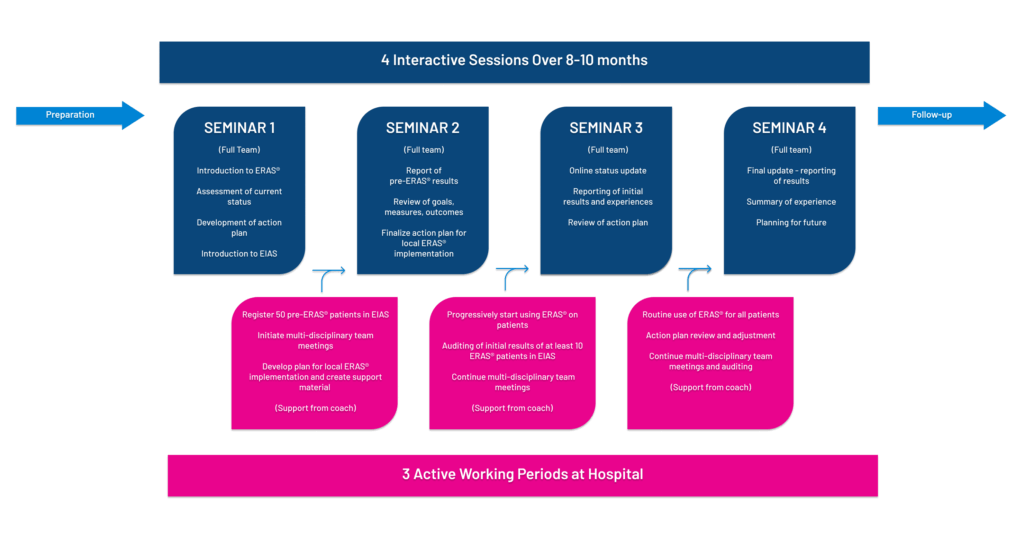
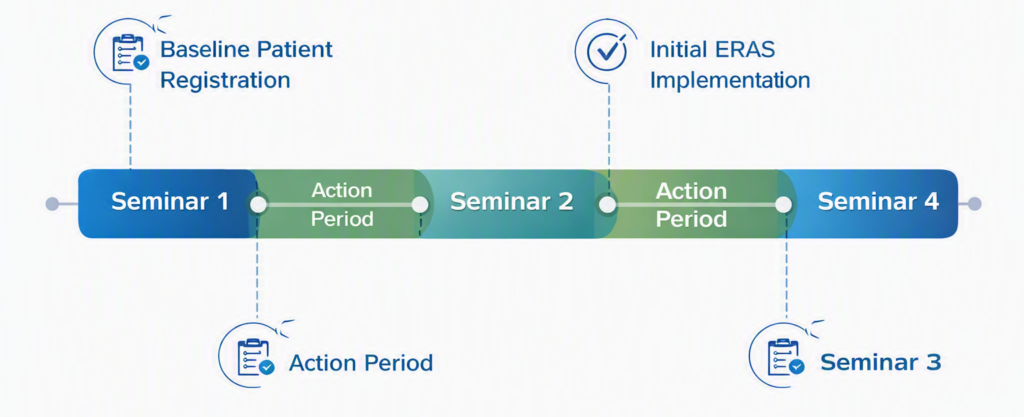
The program follows a specific series of 4 scheduled workshops mixed with homework periods for projects to be carried out in the hospital. Everything is done with the support of Clinical Experts and ERAS Coaches in the ERAS Society. The program uses EIAS as a key vehicle to help monitor, control and change outdated clinical practice to that of evidence-based medicine.
The ERAS Implementation Program (EIP) guides hospital teams from initial preparation to full clinical adoption:
Four Interactive Seminars: Scheduled over 8–10 months and led by clinical experts and ERAS coaches from the ERAS Society.
Three Action Periods: Active working phases at the hospital between seminars where teams register baseline data (50 pre-ERAS patients), test clinical protocol changes, and audit initial ERAS patient cohorts.
Continuous Data Auditing: EIAS, the ERAS Interactive Audit System, is used throughout the program to track pathway compliance, evaluate clinical outcomes, and refine care processes.
ERAS Interactive Audit System
A web based, on-line, interactive software tool to control compliance with the ERAS Protocols (EBM – Evidence Based Medicine) supporting implementation, decision support and continuous quality control in a health care provider setting.
Further, this allows the team to take advantage of the benefits of the ERAS Protocol in terms of reduction in patient recovery time, reduction in the rate of complications, and improvement of the quality of care. By continuous follow up, analysis, adjustments and improvements, the perioperative team and its management can not only ensure improved patient outcome but also increase the understanding of the perioperative care process and thus the motivation of the staff involved.
To support clinical auditing and continuous quality improvement, ERAS Society has partnered with Encare to manage and deliver the ERAS Interactive Audit System (EIAS). Click here to learn more about how EIAS can help monitor protocol compliance and improve patient recovery at your institution.
Successful ERAS Implementation
Driving Sustainable Practice Change
Successful implementation relies on three interconnected elements:
- A Multidisciplinary Team: Teamwork across units is essential. A typical team consists of 5–7 members: a Surgeon (Team Leader), an ERAS® Coordinator / Surgical Nurse (the operational engine responsible for workflow and data entry), an Anesthesiologist, an Anesthesia Nurse, a Department Head / Executive Sponsor (who allocates time and resources), and representatives from Quality Control or Clinical Nutrition.
- The Organizational Will to Change Practice: Implementing scientific best practice requires structured change management. Teams utilize Plan-Do-Study-Act (PDSA) cycles to overcome departmental silos, test adjustments, and embed changes into routine practice.
- Real-Time System for Compliance & Outcome Audit: Continuous auditing via EIAS provides immediate feedback on guideline adherence and patient outcomes, driving data-informed decisions.
Qualification and Certification
Global Recognition for Quality Perioperative Care

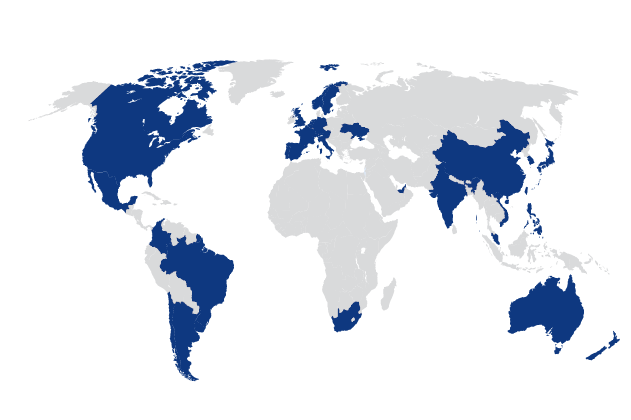
Upon fulfilling the implementation requirements—including regular multidisciplinary audit meetings and achieving target protocol compliance (e.g., 70% overall compliance in EIAS)—the department or clinic is certified as an ERAS® Qualified Unit by the ERAS® Society. Certification is maintained through ongoing protocol adherence and continuous auditing via EIAS. Qualified units may further be designated as ERAS® Centers of Excellence, joining an international network of leading surgical institutions.
Centers of Excellence
ERAS® Centers of Excellence (CoEs) are high-performing hospitals appointed exclusively by the ERAS Society that stand at the forefront of implementing evidence-based protocols and contributing to scientific research.
These leading institutions play a vital role in global expansion by hosting educational site visits, sharing clinical expertise, and providing trained coaches to educate other surgical teams.
Requalification
Since its founding, the ERAS Society has been committed to advancing perioperative care and improving patient recovery through research, education, multidisciplinary teamwork, and the implementation of evidence-based practices. Throughout the years, teams around the world have successfully implemented ERAS programs and demonstrated their commitment to delivering high-quality, patient-centered care.
Achieving ERAS Qualification is a significant accomplishment and reflects the dedication, teamwork, and clinical excellence of each participating hospital team. However, enhanced recovery is not a destination. It is an ongoing commitment to continuous improvement, maintaining best practices, and consistently delivering optimal outcomes for our patients.
To recognize and support this continued commitment, the ERAS Society is pleased to introduce the ERAS Re-Qualification Program. Re-Qualification is designed not as a reassessment of past success, but as a celebration of the work teams continue to do every day to uphold ERAS® principles and maintain high standards of care.
Sustained compliance with ERAS protocols has consistently been associated with improved patient outcomes, and the Society believes that ERAS Qualification should reflect a team’s ongoing dedication to enhanced recovery. As a result, ERAS Qualification will now carry a defined period of validity, with opportunities for centers to demonstrate continued excellence through the Re-Qualification process.
Centers that successfully maintain their Qualified status will continue to be recognized as leaders in enhanced recovery and will receive additional benefits, including:
- Enhanced recognition and visibility on the ERAS Society website
- Opportunities for engagement with the ERAS Society Executive Committee
- Retain ERAS Qualified Center status and continued recognition as a leader in best-in-class, evidence-based patient care
- Future access to new resources and member benefits developed specifically for Qualified Centers